The Influence of Land Use on Antibiotic Resistance Gene (ARG) Abundance in Waters Around East Yangcheng Lake
Name
Yunyi Ru
Major
Molecular Bioscience / Cell and Molecular Biology
Class
2023
About
I'm Yunyi Ru, a cell & molecular biology student of the class of 2023. My research interest includes molecular biology & microbiology.
Signature Work Project Overview
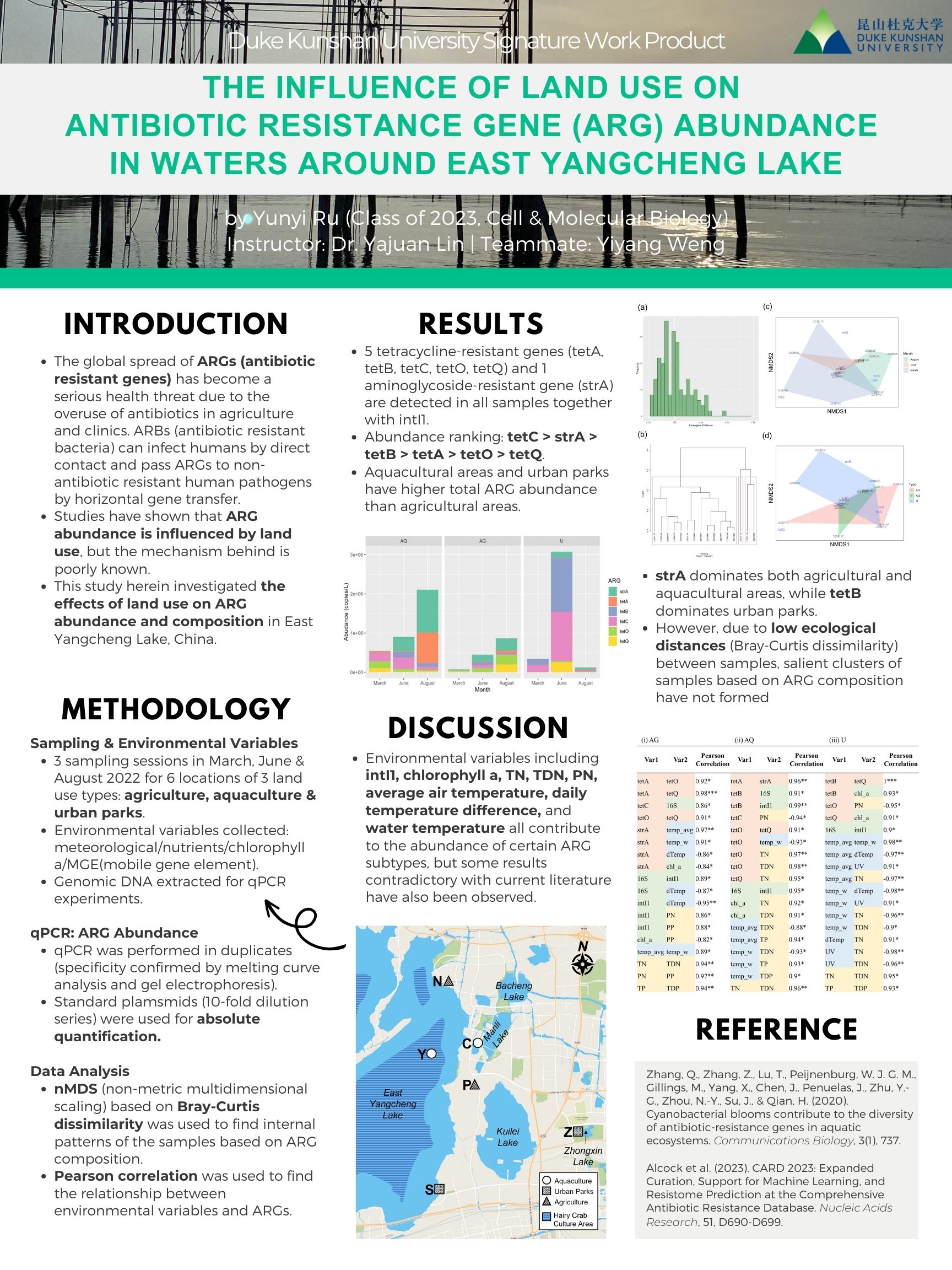
The global spread of ARGs (antibiotic resistant genes) has become a serious health threat due to the overuse of antibiotics in agriculture and clinics. ARBs (antibiotic resistant bacteria) can infect humans by direct contact and pass ARGs to non-antibiotic resistant human pathogens by horizontal gene transfer. Studies have shown that ARG abundance is influenced by land use, but the mechanism behind is poorly known. This study investigated the effects of land use on ARG abundance and composition in East Yangcheng Lake, China. The 6 target ARGs (5 tetracycline-resistant genes: tetA, tetB, tetC, tetO, tetQ; 1 aminoglycoside-resistant gene: strA) and 1 horizontal gene transfer-related gene (intI1) were all detected in agricultural areas, aquacultural areas, and urban parks, with aquacultural areas and urban parks having the highest total ARG abundance. Environmental variables such as nutrient concentration and cyanobacteria abundance were also measured, and many are strongly correlated with ARG abundance. These results demonstrate that land use is a crucial factor in ARG abundance, and it may work by altering local nutrient and cyanobacteria levels.