Ellie Malou Porciuncula is a DKU senior from the United States studying Environmental Science/Public Policy.
Signature Work Project Overview
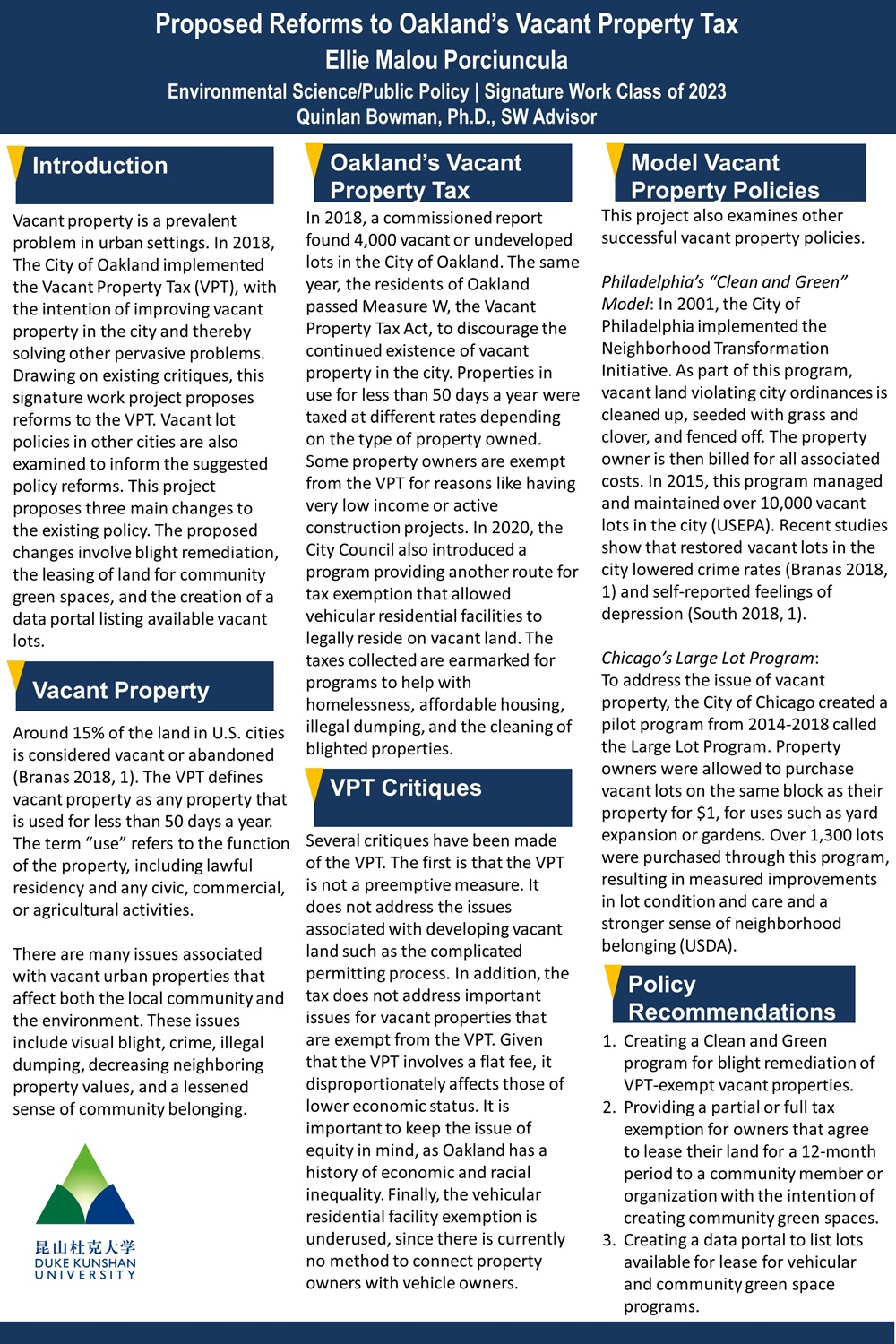
Around 15% of the land in U.S. cities is considered vacant or abandoned (Branas 2018, 1). Vacant property is often associated with issues such as visual blight, crime, illegal dumping, decreasing neighboring property values, and a lessened sense of neighborhood belonging. In 2018, the City of Oakland implemented the Vacant Property Tax (VPT). The tax applies to any property that is used for less than 50 days a year and is meant to encourage the development or the selling of the land. This signature work proposes reforms to the VPT with the intention of improving vacant property in the city and thereby solving other pervasive problems. Ideas for reforming the VPT are also drawn from an examination of Philadelphia’s “Clean and Green” model and Chicago’s Large Lot program. This paper offers three main policy recommendations. The first is to implement a program to remediate blight on properties that are exempt from the VPT. The second is to offer a VPT exemption for property owners that lease their land to community members or organizations to create community green spaces. The third is to create a data portal for available vacant lots that are suitable for vehicular residence and community green spaces.